12: Pre-orders! + Illustrator Interview

Dear readers: pre-orders are live! Although Heartland Masala will not be out until September 9, you can now pre-order it wherever books are sold. We wholeheartedly encourage you to request it at your local independent bookshop, both to support small businesses and to help us get the word out to retailers. The book is available at all of the usual online sources as well.
In case any of your local bookstores have questions about purchasing logistics, please direct them to our publisher’s book page here (where you can also find a sneak peek of some sample pages, and some rather nice things that friends and mentors have written about the book).
In the meantime, I’m delighted to share a recent email interview with our German-born, London-based illustrator Olivier Kugler, below. Our correspondence was lightly edited and condensed for clarity.
A: Hello Olivier! Could you describe your path to becoming a professional illustrator?
O: Hello Auyon! I always loved to draw. When I was a small child, growing up in the Black Forest of Germany, I loved to read Mickey Mouse and Donald Duck comics. I enjoyed drawing—often tracing—these characters. My father is an artist and retired arts teacher. I grew up watching him working on his paintings and etchings. My mother is French. She used to read Tintin comics during her childhood, and she bought me a Tintin book (Prisoners of the Sun) as a Christmas present when I was 8 years old. It was the most inspiring present I ever received : ) Reading Tintin’s adventures sparked my interest in traveling and consolidated my love for comic books.
Some years later I fell in love with the work of Jean Giraud aka Moebius. I was especially fascinated with his work on ‘Blueberry’, a Western. I spent a decent chunk of my early teenage years looking at and copying his drawings while attempting to create my own comics. Working on these drawings was deeply satisfying, but also quite frustrating, as my drawings were merely poor copies—very poor copies indeed—of the work of possibly the greatest comic book artist ever.
When my father saw that I was struggling, he instructed me to stop copying the work of other artists and learn to draw first. “If you want to become a comic book artist, you need to learn the basics,” he explained. “Draw from life. Draw what is around you—no cowboys, no gunslingers! Look in the mirror, draw your self-portrait, the people around you. Draw your hands, draw your sneakers. Draw a lot! Drawing from observation will help you to develop your own style and own voice.”
I took his advice and started to draw from life regularly. At the beginning, I found this quite challenging, but I soon noticed that my drawings were becoming better. A bit later, as a birthday present, my father started to take me to life drawing classes on a Wednesday evening. There, I fell in love with drawing the human figure. I was hooked!
I then wanted to enroll in an illustration degree, but my father and his artist friends all discouraged me against doing so. “Illustration is a bread-less art. Study graphic-design,” they suggested. “The training is quite similar to the one of an illustrator but you will learn a ‘proper’ trade at the same time, so you can always get a job in a design or an advertising company if you should not get any work as an illustrator.”
I took their advice and studied graphic design at the school of applied arts in Pforzheim, Germany. The highlight of my studies was a 7-month scholarship as a guest student at the University of Georgia in Athens, USA. I had a great illustration teacher, Alex Murawski, who introduced me to the work of Alan E. Cober, a successful illustrator who drew a lot, on location: in hospitals, mental health institutions and prisons. Until this stage I thought of drawing on location only as a means to become a better draughtsman and to one day draw my own adventure comic strips. But seeing the work of Alan E. Cober got me really interested in drawing real people and places directly on the spot, on location. So, I spent most of my time in Athens drawing characters in Pain & Wonder, a tattoo parlour, and Jittery Joe’s, a coffee shop next to the famous 40 Watt Club.
Back in Germany, I continued my graphic design degree. For my diploma, I spent 3 months drawing people and places on the Reeperbahn, Hamburg’s red light district. For this work I received the best possible grade, but unfortunately I was not able to get any illustration commissions after my graduation. I was quite frustrated about that and spent the next two years working as a graphic designer in a design agency in Karlsruhe, Germany.
In 2000 I received a scholarship to do an MFA in Illustration as Visual Essay at the School of Visual Arts in New York. Over the next two years I continued to draw on location. It was during this time when I received my first commissions from New York Magazine, the New York Times and The Guardian.
A: The breadth of your reportage is beautifully vast—just from the Drawn from Life section of your website, you cover Syrian refugees, public schools in NYC, and an Iranian trucker. How do you describe up the subject matter that excites you?
O: I just love to draw people in the places I encounter them. I also love traveling. I am very lucky to receive regular commissions to combine these two passions of mine. I am also quite interested in the circumstances of the people I portray. Adding quotes from interviews I conduct, and otherwise telling peoples’ stories through my art, is very important to me.
I certainly find it exciting to meet and draw people in ‘exotic’ locations but I equally enjoy drawing characters I encounter in my daily life. One of my greatest artistic regrets is that I never did a drawing of the car mechanic Herr Günther in his small garage in Simmozheim, the village where I grew up. During the early 90s Herr Günther regularly repaired the first and only car I ever owned: a battered old Mercedes 200D with 55 HP. I enjoyed observing him working in his garage. Sadly, Herr Günther passed away during my time studying in New York.
A: I love that you have both Food and Maps sections on your website. What draws you to those two subjects in particular? What inspired you to start drawing each?
O: I love to eat food. I don’t consider myself to be a good chef but I enjoy cooking and I like watching other people cook.
For about four years I had a beautiful time contributing a quarter-page illustration for a food column in the German edition of GQ magazine. Each month the magazine’s art director sent me a new recipe, I bought the ingredients and then cooked the meal at home. During the cooking, I took photos which I used as references for my drawings. Sometimes I drew the finished meal, other times just a still life portraying the ingredients. I also enjoyed drawing and documenting the prepping and cooking processes.
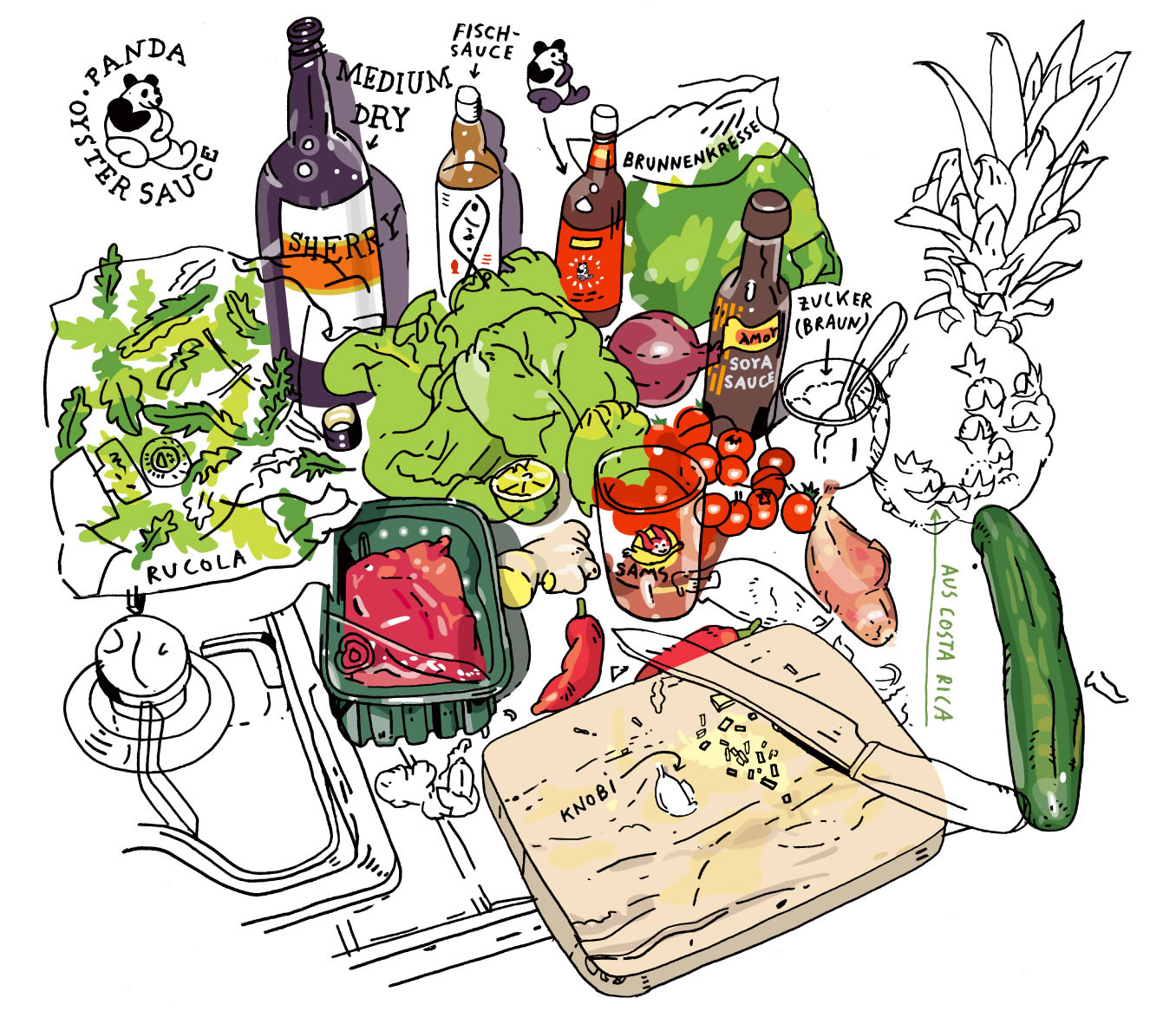
For someone who feels most comfortable in just preparing simple pasta meals, working on these commissions felt quite adventurous to me. I enjoyed the challenges in the kitchen, the food I cooked, and the drawings I produced. I am tremendously excited to receive a copy of Heartland Masala in print and to try my hand at some of the recipes... this will be one hell of a culinary adventure!
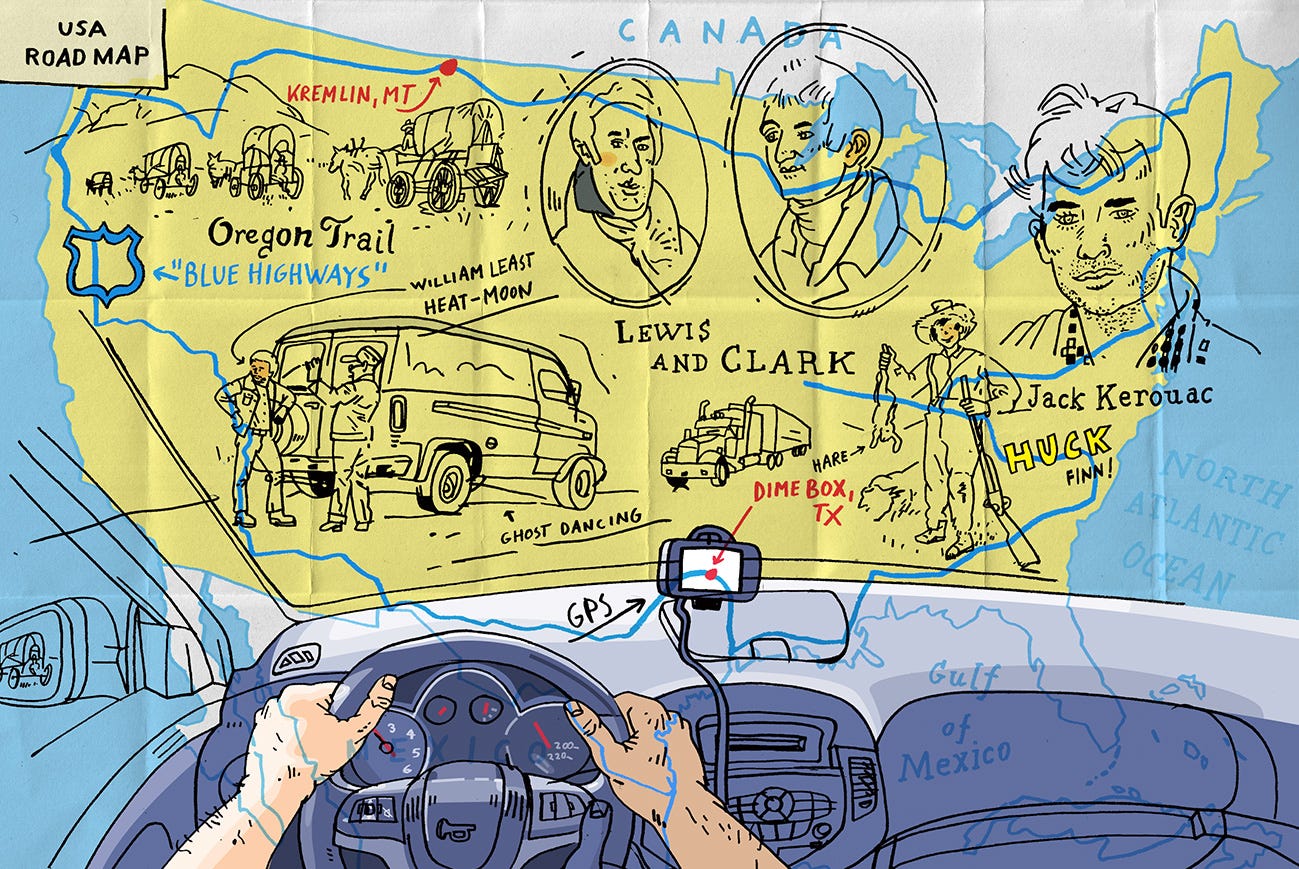
As far as maps, my interest comes from my love for traveling and my general interest in how the world works. As an illustrator, I am naturally drawn to the beauty of maps.
A: Are there any particular foods you are especially enamored by?
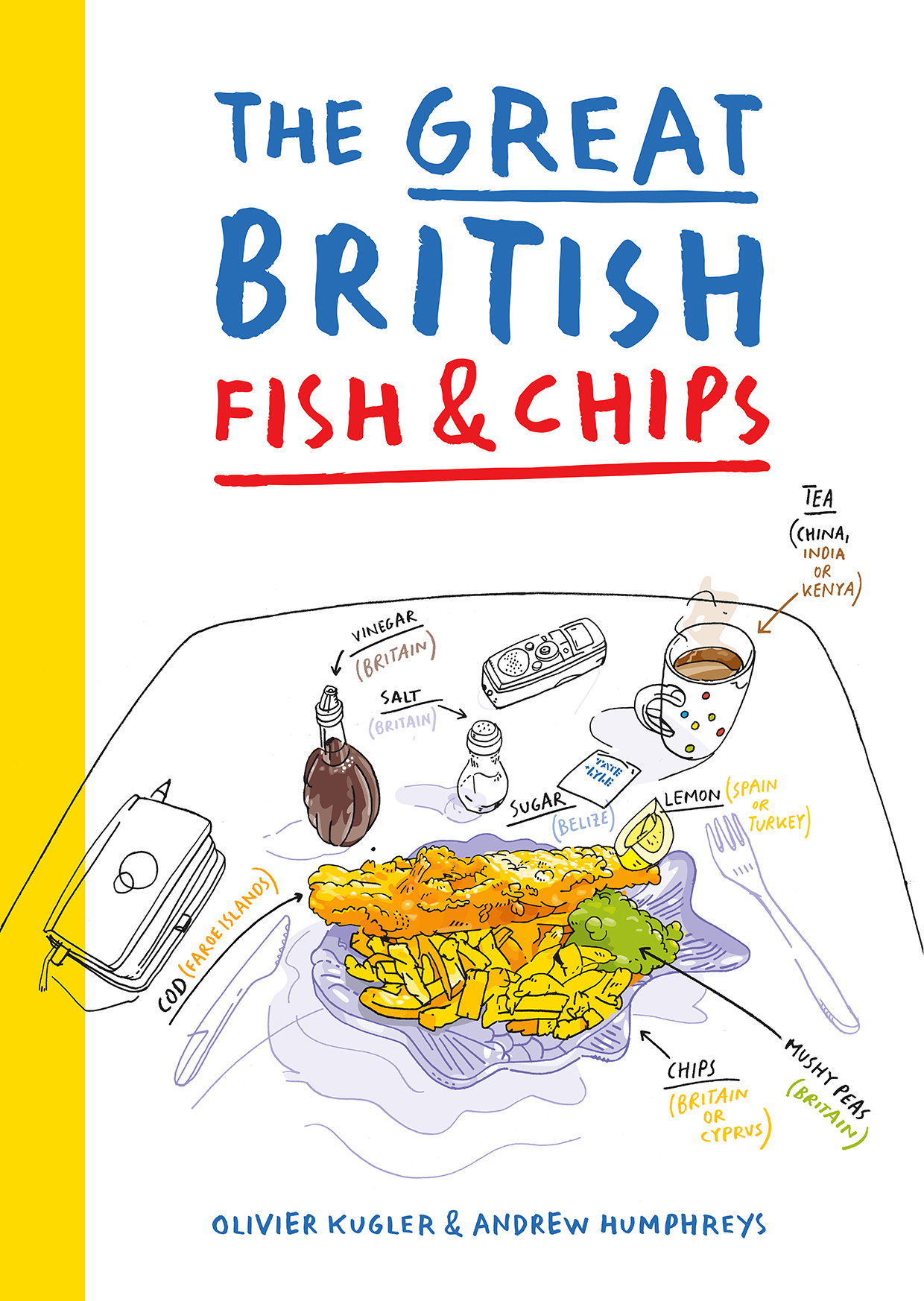
O: I am a bit obsessed with fish & chips, Britain’s soul food. Over the last few years, I have spent a lot of time observing and drawing people working in fish & chips shops all over the UK. I’ve even gotten to do a few commissions related to the dish, all of which are collaborations with Andrew Humphreys, a writer, journalist and a great friend of mine.
Last Night at Benny’s: A 24-page journal for the French publication Revue XXI documenting the last day of a fish & chips shop in Clapham which was run by three generations of Greek-Cypriot immigrants.
The Kent Fish & Chips Project: A commission from Counterpoints Arts to produce work that explores everyday stories of migration connected to fish & chips. The work was exhibited during summer 2021 at the Turner Contemporary in Margate and at Canterbury Cathedral.
The Great British Fish & Chips (or Fish, Chips & Brexit): The Swiss Reportagen magazine commissioned us to create a 20-page journal explaining—to a German speaking audience—why fishing played such an emotive role during the Brexit discussions.
A: Could you describe the book-length projects you have worked on?
1.) Tea in Iran
This 30-page journal documents the daily life of Massih, a truck driver I met in Iran. My drawings document the trucker’s 3-day journey delivering a load of bottled water from a bottling plant in the mountains north of Tehran to a small island in the Persian Gulf. The drawings were published in the French magazine Revue 21 and were awarded with the top prize at the Victoria & Albert Museum’s Illustration Awards 2011.
2.) The Elephant Doctor in Laos
Another 30-page journal published in Revue 21 documents the work of a young French veterinarian, Bertrand, whom I had the pleasure of joining on a weeklong mission to remote logging camps in the highlands of Laos, where he is looking after the health of working elephants. The work was also published, with the addition of a few pages, in book form by Edition Moderne, a Swiss-German publisher.
A larger book project documenting the circumstances of Syrian refugees I met. The project started with a commission in 2013 from Médecins Sans Frontières / Doctors Without Borders to spend time with Syrians in Domiz, a refugee camp in Iraqi Kurdistan, and to create drawings documenting their circumstances in order to help raise awareness. Drawings from this series were published in Harper’s and awarded with the top prize at the World Illustration Awards 2015.
Follow-up assignments enabled me to create additional work portraying Syrian refugees in Greece, Germany, France and England. This work has been exhibited all over the world and was published as a book: Escaping Wars and Waves by Myriad Editions in the UK and by Penn State University Press in the USA. The German edition received the Gold Jury Prize at the European Design Awards 2018.
A: Do you have any favorite or standout illustrations/memories from working on Heartland Masala?
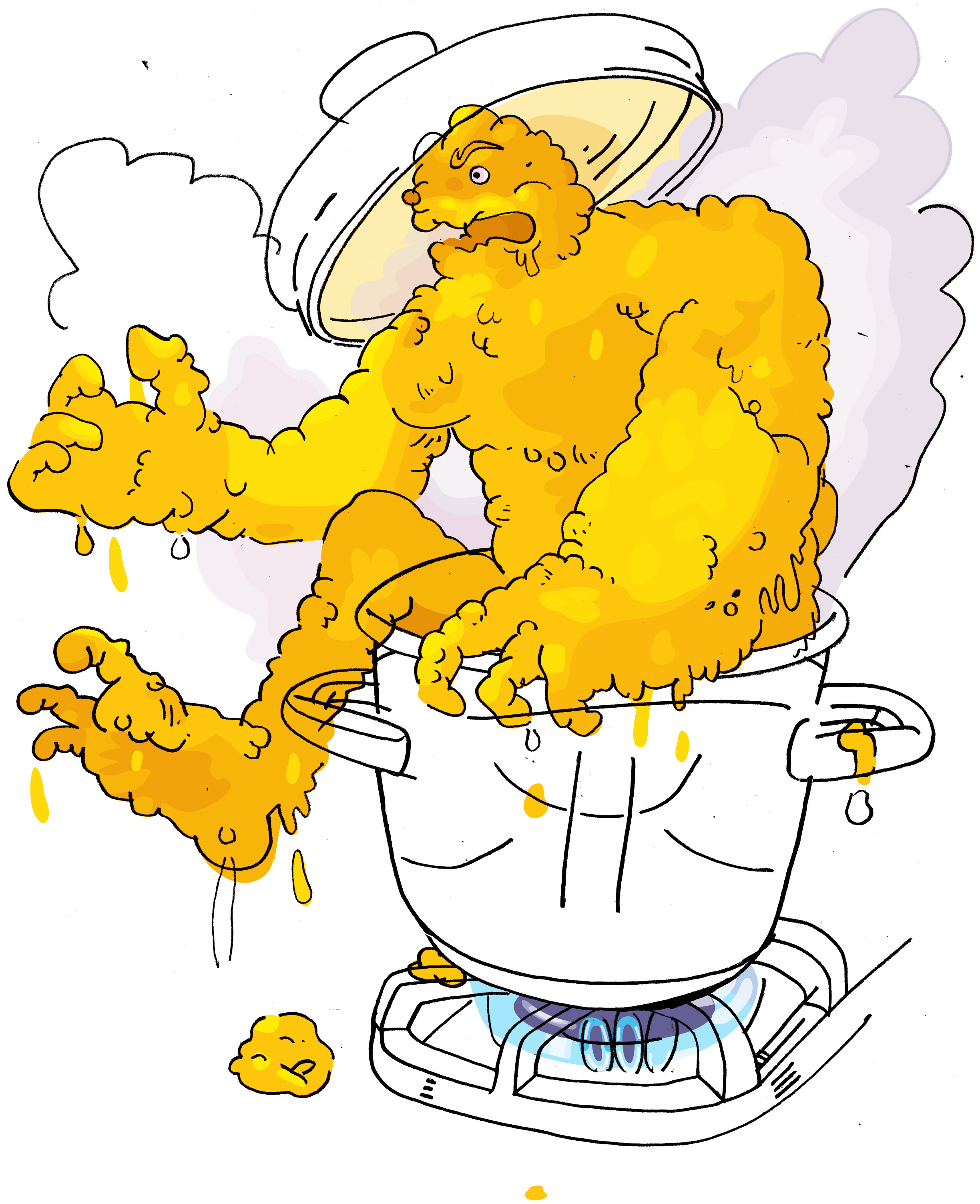
O: I enjoyed working on all the drawings. Some of my favorites are the map of India, the two lemons trekking along the Himalayas, and the super scary daal monster : ) Regarding these two last pictures, I was a bit worried when I read your original briefings. I am used to drawing real people and places from life or from reference photos, so I felt a bit uncomfortable in creating ‘cartoon’ characters. But I had a fun time working on them and I am very happy with the result.
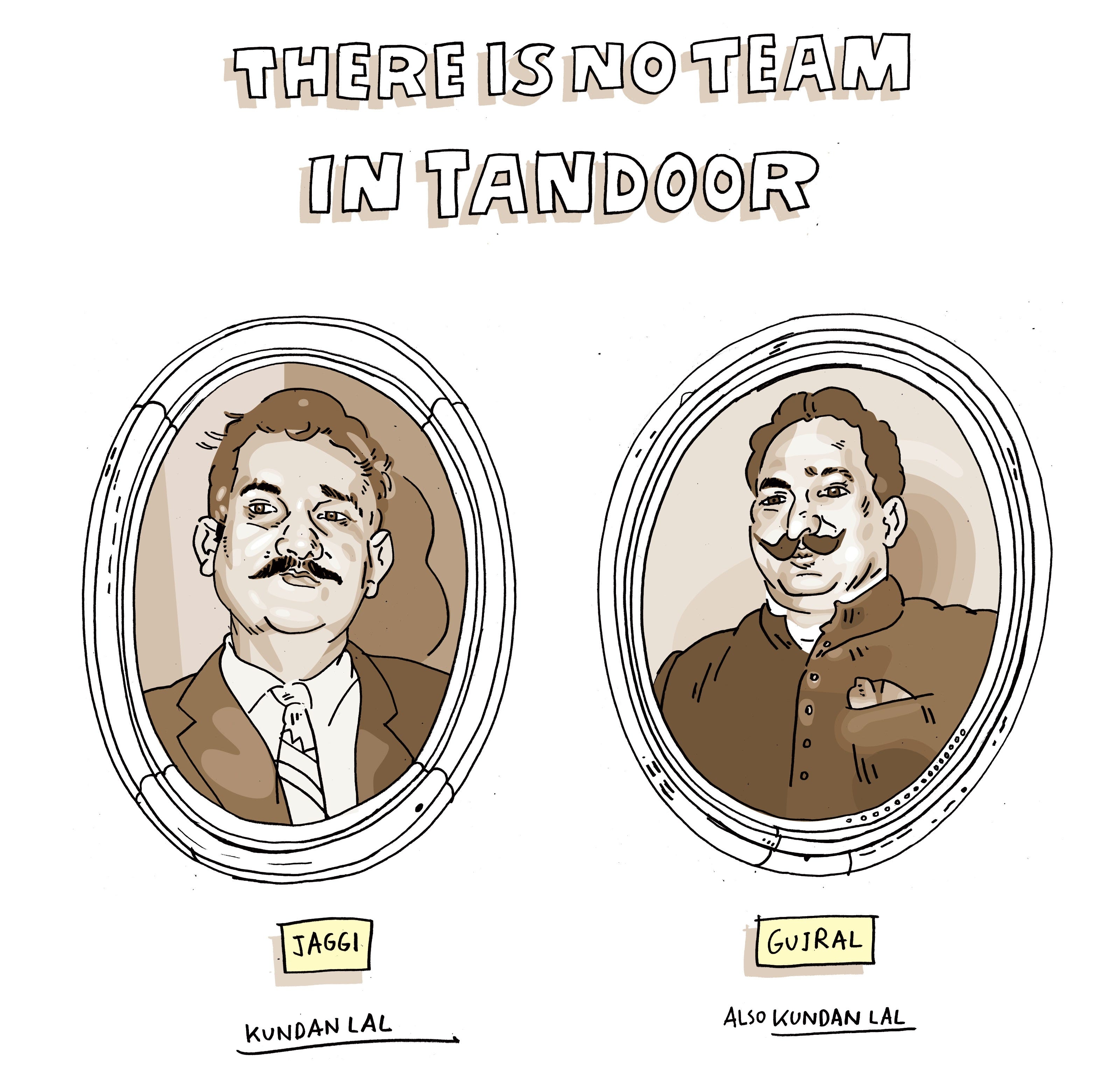
The most fun I had, though, was drawing the two Kundan Lals with their handsome moustaches. While working on these drawings I had to think of the endpapers in the Tintin comics, which present the framed portraits of the most prominent characters Tintin encounters on his adventures. Happy memories!
Thanks for reading, as ever. Until the next!
Auyon
As a for y'all's information, Bookshop.org allows you to choose a local bookstore to receive the profit from books you order. The profit goes into a pool divided among participating bookstores if you don't choose one. I believe the site started as a way to support independent bookstores while COVID restrictions kept them closed, but it still exists as a way to support them if you don't have independent stores in your area and/or don't want to venture into public.
Thank you for sharing this fascinating conversation with your illustrator! I know you, I know your mom, I know the recipes and now I feel like I know the illustrator—I cannot wait to hold all of this precious work in my hands! I will preorder asap. 👍❤️